 Autoplast
· HDPE Technical Team · Technical Guide · 6 min read
HDPE Pipes for Irrigation - Complete Guide to Selection and Installation
Everything you need to know about High-Density Polyethylene pipes for irrigation systems, including selection criteria, installation best practices, and maintenance tips.
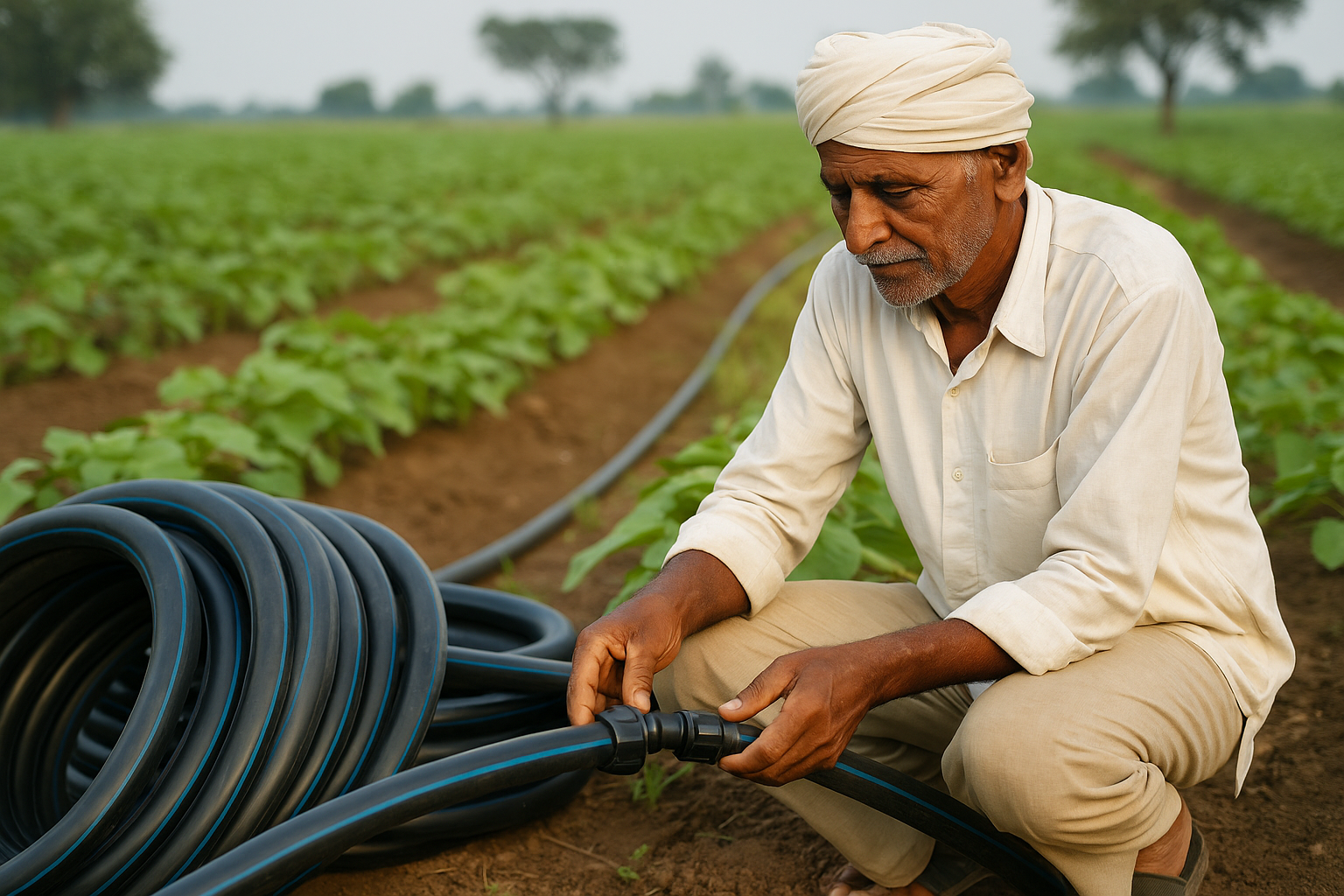
The Ultimate Guide to HDPE Pipes for Modern Irrigation Systems
High-Density Polyethylene (HDPE) pipes have revolutionized irrigation infrastructure worldwide. Known for their exceptional durability, flexibility, and cost-effectiveness, HDPE pipes form the backbone of modern water distribution systems. Whether you’re planning a small farm irrigation setup or a large-scale agricultural project, understanding HDPE pipes is crucial for long-term success.
What Makes HDPE Pipes Superior?
Material Advantages
Chemical Composition: HDPE is a thermoplastic polymer made from petroleum. Its molecular structure provides unique properties that make it ideal for water distribution:
- High molecular weight for strength
- Chemical inertness for purity
- Flexibility without brittleness
- UV resistance for longevity
Key Properties:
- Density: 0.941-0.965 g/cm³
- Melting Point: 120-130°C
- Tensile Strength: 22-31 MPa
- Flexibility: Excellent even at low temperatures
- Chemical Resistance: Outstanding against most chemicals
Performance Benefits
Durability:
- 50+ year design life
- Resistant to cracking and splitting
- Maintains integrity under ground movement
- Withstands freeze-thaw cycles
Hydraulic Efficiency:
- Smooth internal surface reduces friction
- Maintains flow capacity over time
- No internal corrosion or scaling
- Lower pumping costs
Installation Advantages:
- Lightweight compared to metal pipes
- Flexible routing around obstacles
- Fewer joints required
- Reduced installation time and cost
HDPE Pipe Specifications and Standards
Pressure Ratings
Standard Pressure Classes:
- PN 4: 4 bar working pressure (40m head)
- PN 6: 6 bar working pressure (60m head)
- PN 8: 8 bar working pressure (80m head)
- PN 10: 10 bar working pressure (100m head)
- PN 12.5: 12.5 bar working pressure (125m head)
- PN 16: 16 bar working pressure (160m head)
Pressure Rating Selection: Choose pressure rating based on:
- Maximum system pressure
- Safety factor (typically 2:1)
- Water hammer considerations
- Temperature variations
Diameter Options
Small Diameter (16mm - 63mm):
- Lateral lines and distribution
- Residential and small farm applications
- Easy handling and installation
- Cost-effective for shorter runs
Medium Diameter (75mm - 250mm):
- Main distribution lines
- Sub-main networks
- Commercial irrigation systems
- Balance of flow capacity and cost
Large Diameter (280mm - 630mm):
- Primary distribution mains
- High-capacity systems
- Municipal and industrial applications
- Maximum flow efficiency
Quality Standards
Indian Standards:
- IS 4984: HDPE pipes for water supply
- IS 14333: HDPE pipes for irrigation
- IS 13488: Fittings for HDPE pipes
International Standards:
- ISO 4427: Water supply pipes
- ASTM D3035: Water service pipes
- EN 12201: European standard for water pipes
Selecting the Right HDPE Pipe
Flow Rate Calculations
Basic Flow Formula: Q = A × V Where:
- Q = Flow rate (liters/minute)
- A = Cross-sectional area (cm²)
- V = Velocity (m/s)
Recommended Velocities:
- Suction Lines: 0.6 - 1.2 m/s
- Pressure Lines: 1.0 - 2.5 m/s
- Main Distribution: 1.5 - 3.0 m/s
Pressure Loss Considerations
Factors Affecting Pressure Loss:
- Pipe diameter and length
- Flow rate and velocity
- Pipe roughness (very low for HDPE)
- Fittings and direction changes
- Elevation changes
Hazen-Williams Formula: For HDPE pipes, use C = 150 (very smooth)
Soil and Environmental Factors
Soil Conditions:
- Rocky Soil: Choose thicker wall pipes
- Expansive Clay: Allow for ground movement
- Sandy Soil: Standard specifications suitable
- High Water Table: Consider buoyancy protection
Climate Considerations:
- Hot Climates: UV-resistant compounds
- Cold Regions: Low-temperature flexibility
- Coastal Areas: Salt water resistance
- High Altitude: Pressure and temperature variations
Installation Best Practices
Pre-Installation Planning
Site Survey:
- Topographic mapping
- Soil condition assessment
- Utility location and marking
- Access route planning
Material Preparation:
- Pipe inspection and storage
- Fitting compatibility check
- Tool and equipment readiness
- Weather condition monitoring
Trenching and Excavation
Trench Specifications:
- Width: Pipe diameter + 300mm minimum
- Depth: Below frost line, minimum 600mm
- Slope: 0.5% to 2% for drainage
- Bedding: 150mm of sand or fine aggregate
Excavation Guidelines:
- Avoid sharp objects in trench
- Maintain stable trench walls
- Provide adequate working space
- Plan for dewatering if necessary
Pipe Laying Procedures
Handling Guidelines:
- Avoid dragging pipes on rough surfaces
- Support pipes every 1-2 meters
- Protect from direct sunlight during storage
- Handle with care to avoid scratches
Installation Steps:
- Prepare Bedding: Level sand bed
- Lay Pipe: Maintain proper alignment
- Check Grade: Verify slope requirements
- Joint Preparation: Clean and inspect ends
- Connection: Follow joining procedures
Joining Methods
Butt Fusion Welding:
- Applications: Larger diameter pipes (>63mm)
- Process: Heat both ends and press together
- Advantages: Strongest joint, no fittings needed
- Equipment: Butt fusion machine required
Electrofusion Welding:
- Applications: All sizes, repairs, fittings
- Process: Electric heating of special fittings
- Advantages: Precise, consistent joints
- Equipment: Electrofusion control unit
Mechanical Fittings:
- Applications: Smaller sizes, temporary connections
- Types: Compression, push-fit, threaded
- Advantages: No special equipment, reversible
- Considerations: Regular inspection needed
System Design Considerations
Network Layout
Tree System:
- Single main line with branches
- Cost-effective for linear layouts
- Suitable for row crops
- Limited redundancy
Loop System:
- Interconnected network
- Better pressure distribution
- Reduced dead ends
- Higher initial cost but better performance
Grid System:
- Multiple feed points
- Maximum redundancy
- Even pressure distribution
- Most expensive but most reliable
Pressure Management
Pressure Zones: Create separate zones for:
- Different elevation areas
- Varying flow requirements
- Different crop types
- Maintenance isolation
Pressure Regulation:
- Install pressure reducing valves
- Use variable speed pumps
- Design for peak demand periods
- Include pressure monitoring points
Flow Control and Monitoring
Control Valves:
- Gate Valves: Full flow or shut-off
- Ball Valves: Quick operation
- Butterfly Valves: Throttling control
- Check Valves: Prevent backflow
Monitoring Equipment:
- Flow meters for usage tracking
- Pressure gauges at key points
- Water quality sensors
- Remote monitoring capabilities
Maintenance and Troubleshooting
Preventive Maintenance
Regular Inspections:
- Visual inspection of exposed pipes
- Pressure testing annually
- Joint inspection for leaks
- Valve operation checks
Cleaning Procedures:
- Periodic flushing of lines
- Chlorination if required
- Removal of sediment buildup
- Filter cleaning in systems
Common Issues and Solutions
Pressure Loss Problems: Symptoms:
- Reduced flow at outlets
- Pump working harder
- Uneven distribution
Causes and Solutions:
- Clogged filters → Clean or replace
- Partially closed valves → Inspect and adjust
- Leaks in system → Locate and repair
- Undersized pipes → System upgrade needed
Joint Failures: Symptoms:
- Water leaks at connections
- Pressure drops
- Soggy ground areas
Causes and Solutions:
- Poor installation → Re-do joints properly
- Ground movement → Install flexible connections
- Pressure surges → Install surge protection
- Age-related failure → Replace worn joints
Pipe Damage: Symptoms:
- Sudden pressure loss
- Water surfacing
- Muddy or discolored water
Causes and Solutions:
- Third-party damage → Install warning tape
- Ground settlement → Proper bedding and backfill
- Freeze damage → Insulation or deeper burial
- Manufacturing defect → Warranty replacement
Economic Considerations
Initial Investment
Cost Components:
- Pipe material costs
- Fitting and valve costs
- Installation labor
- Equipment and machinery
- Site preparation and restoration
Cost Comparison: HDPE vs. Other Materials:
- Initial Cost: Moderate (between PVC and steel)
- Installation Cost: Lower (easier handling)
- Maintenance Cost: Lowest (corrosion resistant)
- Lifecycle Cost: Most economical
Return on Investment
Direct Savings:
- Lower maintenance costs
- Reduced water loss from leaks
- Energy savings from smooth bore
- Longer replacement intervals
Indirect Benefits:
- Improved crop yields from reliable water
- Reduced labor for maintenance
- System expandability
- Property value enhancement
Financing Options
Government Programs:
- Subsidy schemes for drip irrigation
- Low-interest agricultural loans
- Water conservation incentives
- Technology adoption grants
Private Financing:
- Equipment financing
- Contractor payment plans
- Cooperative purchasing
- Leasing options
Future Developments
Technology Advances
Smart HDPE Systems:
- Embedded sensors in pipes
- Real-time monitoring capabilities
- Predictive maintenance systems
- Integration with IoT platforms
Material Improvements:
- Enhanced UV resistance
- Antimicrobial properties
- Self-healing capabilities
- Recyclable formulations
Sustainability Aspects
Environmental Benefits:
- 100% recyclable material
- Lower carbon footprint
- Reduced energy consumption
- Minimal environmental impact
Circular Economy:
- Pipe recycling programs
- Reuse in non-critical applications
- Material recovery systems
- Sustainable manufacturing practices
Selection Guidelines Summary
For Small Farms (1-5 acres):
- Diameter: 32mm to 75mm mains
- Pressure: PN 6 to PN 10
- Joining: Mechanical fittings acceptable
- Layout: Simple tree system
For Medium Farms (5-25 acres):
- Diameter: 75mm to 160mm mains
- Pressure: PN 8 to PN 12.5
- Joining: Electrofusion recommended
- Layout: Modified tree or simple loop
For Large Farms (25+ acres):
- Diameter: 160mm+ mains
- Pressure: PN 10 to PN 16
- Joining: Butt fusion for mains
- Layout: Loop or grid system
Quality Assurance
Testing Requirements
Factory Testing:
- Pressure testing to 1.5 × working pressure
- Dimensional verification
- Material property testing
- Quality certification
Field Testing:
- Hydrostatic pressure testing
- Joint integrity testing
- Flow and pressure verification
- Commissioning procedures
Installation Quality Control
Inspection Points:
- Trench preparation
- Pipe laying alignment
- Joint preparation and execution
- Backfilling procedures
- Pressure testing results
Conclusion
HDPE pipes represent the gold standard for modern irrigation infrastructure. Their combination of durability, performance, and cost-effectiveness makes them the ideal choice for agricultural water distribution systems. Success with HDPE pipes depends on proper selection, quality installation, and regular maintenance.
When planning your irrigation system, consider HDPE pipes as a long-term investment in your agricultural productivity. With proper design and installation, an HDPE pipe network will provide decades of reliable service while minimizing maintenance costs and maximizing water efficiency.
The key to success lies in working with experienced professionals who understand both the technical aspects of HDPE systems and the practical requirements of agricultural irrigation. Our team of specialists can help you design and implement the perfect HDPE pipe network for your specific needs.
Ready to upgrade your irrigation infrastructure with HDPE pipes? Contact our technical team for expert guidance on system design, component selection, and professional installation services. We’re committed to helping you build a reliable, efficient irrigation system that will serve your farming operation for decades to come.